Showing posts with label India. Show all posts

Once the Double Taxation Avoidance Agreement (DTAA) is ratified at the Parliaments of India and Switzerland, India will be given access to the information it wants on bank deposits and accounts of Indians.

BANGALORE: Once the Double Taxation Avoidance Agreement (DTAA) is ratified at the Parliaments of India and Switzerland, India will be given access to the information it wants on bank deposits and accounts of Indians.
Switzerland’s Ambassador to India H E Philippe Welti disclosed this here on Friday.
At a session on ‘Switzerland- India: A strong partnership, investment & business opportunities’, he said the Indian Parliament was ready to ratify the DTAA and Switzerland would do it soon.
Switzerland, Welti said, still had distinction between tax fraud and tax evasion.
“While tax fraud is a crime, tax evasion is not, though it is prohibited in our country.
We have strict rules for banks and have signed about 70-75 bilateral treaties and agreements with several SAARC countries,” he explained.


Further, he said around 120 Swiss manufacturers had their presence in India, out of which 20-30 were in Bangalore. “We are especially focused on manufacturing, science and technology, and hi-tech sectors, such as information technology and nanotechnology,” said Welti.
Informing that there was a 30 per cent growth in the number of visa applications from India over the past year, he said the new South Consul General office in Bangalore would be functional in near future and would cater to the visa applicants from south India.
At the meet, Executive Director of Swissnex India, Sylvia Hostettler, said they were involved in 22 research projects in the country. “Our key areas of focus are nanotech, IT, health sciences, urban development and renewable energy, among others,” she explained.

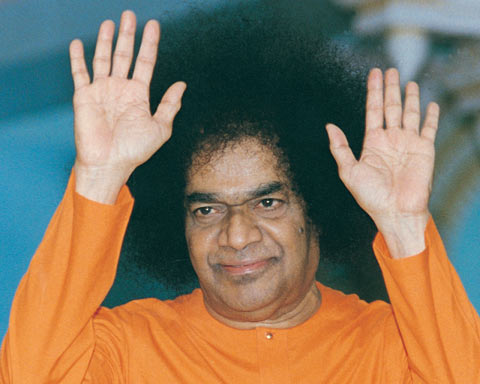
98 kilos of gold, 11.56 crore in cash, and 307 kilos of silver were discovered from the private chambers of Sri Sathya Sai Baba's at his ashram Yajur Mandir in Puttaparthi

The spiritual and religious guru of millions died on April 24.


Sai Baba's chambers were locked up after he fell ill in late March and was moved to a local hospital.


The room was opened last evening by members of the Trust and Satyajit, who was Sai Baba's personal assistant. Two senior retired judges were present.  An assessor approved by the Income Tax Department assisted in evaluating the gold, jewellery and silver, according to Trust member and Sai Baba's nephew R J Ratnakar.


"The cash found in the Yajur Mandir has been deposited in the account of the Trust in State Bank of India, Prasanthi Nilayam," Mr Ratnakar told reporters here.


Doc 3

Eminent painter Maqbool Fida Husain passes away in London of heart attack , m f hussain paintings controversy, m f hussain paintings madhuri dixit, m f hussain controversial paintings

Renowned painter MF Hussain passed away in London today. Hussain, aged 95, died of Heart attack at 2:30 am today - 9th June 2011


Maqbool Fida Husain, commonly called as MF Hussain is termed as Picasso of India for his artistic works. Many of his paintings has drawn controversy in India and Abroad which led to death threats.


Most famous Temples of Delhi : Birla Mandir,Kalkaji Mandir, Chattarpur Mandir, Iskcon Temple, Lotus Temple, Bala Hanuman Temple , Akshardham Temple, Aurobindo Ashramà, Gauri Shankar Temple, Kali Bari Mandir : values, faith, Importance, origin and visit times

In an antique land like Delhi, the spirituality and devotion for the supreme self rises much higher than the soaring spires of old temples. The capital is dotted with serene temples that portray an impeccable blend of exquisite architecture and reverence, nestling under the shadow of evergreen trees. During the festive season,you can see hundreds of devotees hemming into offer their ovation,along with hundreds of coconuts,fragrant garlands and sweets. The temples are adorned with colorful lights that create a magnificent vista,glittering handsomely in the eyes of the devotees.


Birla Mandir


Birla Mandir also known as Laxmi Narayan Temple, it is ideally located in central delhi (Mandir Marg). This Temple which is dedicated to goddes of wealth,Laxmi and Narayana was built in 1938 by prominent Indian Industrialist Raja Bal Dev das Birla and inaugurated by Mahatma Gandhi. This Temple is built in Orrisa style and has man Idols representing various gods of Indian panthon.


Kalkaji Mandir


Situated beyond the commercial complex of Nehru Place this temple is dedicated to the Goddess Kalka Devi. Its oldest section dates back to 1764 and additions were made in the mid-19th century. However most of the building is modern thousands of pilgrims visit the temple specially in Octomber during the nine days of Navratras,when a huge fair is held here.


Chattarpur Mandir

 
One of the most popular hindu temples around Delhi,Chattarpur Mandir is located at a distance of four kilometer from Qutab Minar. The main temple is dedicated to Goddess Durga, while the devotees can also worship Shiva,Vishnu,Laxmi aur Ganesh in adjoining temples.During Durga puja days this place attractes a large number of devotees, who gather here to prayers. It is believed that tying a thread on a tree located in the temple premises will get the desired wishes fulfilled. It is a big temple complex that represents both South and North Indian style of architecture.


Iskcon Temple

Iskcon Temple is a complex of Temples which was Completed in 1998. Built on a hill place it is dedicated to the Lord Krishna and was built by the Hare Rama Hare Krishna cult followers. This complex is elegantly built and is one of the largest temple complexes in India. The main attractions of the temple are its central prayer hall and the temple museum. The festival of Janmashtami,the birth of Lord Krishna is celebrated here on a large scale.


Lotus Temple


It is a lotus shaped Temple Located in Kalkaji south of delhi, made up of marble,cement,dolomite and sand. It is open to all faiths and is an ideal place for meditation. It is a very recent architectural marvel of the Bahai faith,Bahai faith is the youngest of the world's independent religion. Fariborz Sahba, canadian architect of Iranian origin,spent 10 years in designing and project management,and with the help of a team of about 800 engineers,technicians,artisans and workers brought to realisation one of the most difficult construction of the world.


Bala Hanuman Temple

The elegant temple stands on the south-eastern side of Ranmal Lake. The 24 chanting of the Mantra 'Sri Ram,Jai Ram,Jai Jai Ram' which has been going in the temple since August 1,1964, has earned a place in the Guinness Books of world Records.


Akshardham Temple

The embrosial Akshardham Temple nesting on the banks of river yamuna over 100 acres of land, the Temple is a modern signature of exquisiote beauty. It is one of the biggest and most intricate religious of worship ever constructed. The temple affords a beautiful matrix of marble and Red Stone with many alluring sculptures that embellish its periphery.The temple is a desired fruit of 5 years of non stop and round the clock construction.


Aurobindo Ashramà

It is located on the south of Dehi near the Indian Institute of Technology on the road of Maharauli it has literature on the life of Sri Aurobindo and the mother and has an Ashram where devotees can come to meditate.


Gauri Shankar Temple

The 800 year old Gauri Shankar Temple is located next to the Digambar Jain Temple on the main Chandini chowk road. One of the most important temples of shaivism (a sector of Hiduism that worship Lord Shiva) in the country. It has an 800 year old brown lingam encased in a marble representation of a female organ,surrounded by snakes made of silver,the lingam according to Hinduism represents a 'cosmic pillar,the center of universe,the life it self'. The auspicious day to visit the temple is Monday as it is considered to be the day of Lord Shiva.


Kali Bari Mandir

A stones through from Birla Mandir to the right is the much smaller but quite popular temple devoted to the Goddess Kali. Especially dear to the bengali community of delhi,Kali Bari Mandir in delhi is the centre of celebration during the festival of Durga Puja

Fort five-year-old Premlata Agarwal ,Mother of two daughters, became the oldest Indian woman to conquer Mount Everest

Mumbai:  Premlata Agarwal became the oldest Indian woman to conquer Mount Everest on Friday, an official said here.  Mother of two daughters, one of whom is married, Premlata ascended the world's highest peak at 9.35 am, said a spokesperson for her sponsors.


Fort five-year-old Premlata began her preparations to scale the world's tallest peak on May 6 when she went from the base camp at 18,000 feet to Camp 2 at 22,000 feet.


Then, with the help of artificial oxygen, she reached Camp 3 at 23,000 feet and Camp 4 at 26,000 feet.


She caught some rest on Thursday before embarking on her arduous climb to the summit at 11 pm, and finally reaching there after nearly 11 hours.

Before conquering world's highest peak, Premlata went on a climbing exercise at 20,300-feet-high Island Peak in the Himalayas, besides going up and down the Everest base camps for over a month to acclimatise herself with the tough conditions and regime.


Premlata has now become the first woman from the Marwari community to scale Everest. She has participated in several adventure events like the Karakoram Pass expedition, an ascent on Stok Kangri, and the first Indian women's Thar Desert expedition which involved a 40-day camel safari from Bhuj in Gujarat to Attari in Punjab.

Pay your commercial taxes anytime, anywhere online through e-remittances from six banks - SBI, SBM, SBH, Syndicate Bank, Canara Bank and Union Bank of India, without physically approaching an office of the Commercial Taxes Department in Karnataka

Karnataka today became the first State in the country to launch an e-payment system for commercial tax payers.
Speaking at the launch, Reserve Bank of India Deputy Governor Shyamala Gopinath wanted such a system to be adopted by other States.
The system enables dealers to remit their commercial taxes anytime, anywhere, without physically approaching an office of the Commercial Taxes Department (CTD). 


Karnataka Chief Minister B.S. Yeddyurappa launched a comprehensive e-Payment system for Commercial Taxes Department in Bangalore on Thursday. Photo: K. Gopinathan.


Right now, e-remittances can be made from six banks - SBI, SBM, SBH, Syndicate Bank, Canara Bank and Union Bank of India.

Chief Minister B S Yeddyurappa said more public sector banks would be added to the list going forward. He said the system would also help curb tax evasion.
Mr. Gopinath launched the reconciliation portal of the CTD.
Commercial Taxes Department officials said the new model was a “comprehensive e-payment reconciliation system” that would “run seamlessly from the dealer up to the government treasury”.
The CTD collects more than Rs 2,000 crore per month and till now, these collections were by way of cheques by the dealers.
Every month on average, more than one lakh cheques were received by various offices of the CTD and these are then sent to the agency bank, which in turn processed them and remitted to the government account.
This involved a huge amount of manual work and at the same time, delay in realisations of amount and some cases of bounced cheques also. The reconciliation process was very difficult. Also, dealers were inconvenienced as they had to come to the respective offices and wait in a long queue to remit the tax. 
src: TH

Civil Services (Main) Examination 2010 results and topper is Ms S Divyadarshini from chennai and Ms Sweta Mohanty from Hyderabad is 2nd

Ms S Divyadarshini has topped the Civil Services (Main) Examination 2010, the results of which were announced today, while the second position has gone to Ms Sweta Mohanty from Hyderabad.


Mr R V Varun Kumar of Chennai, the topper among male candidates, has secured the overall third rank.


Ms Divyadarshini has done her B.A. B.L. (Hons.) from Dr Ambedkar Law University, Chennai. This was her second attempt at the prestigious examination.


Ms Mohanty has done B.Tech. (Computer Science) from the Gokaraju Rangaraju Institute of Engineering and Technology, Jawaharlal Nehru Technological University, Hyderabad. Mr Varun Kumar has done Bachelor in Dental Sciences from the Ragas Dental College, Chennai. This was his third attempt in the examination.


An official press release said that, based on the results of the written part of the examination held in October-November last year and the interviews for personality test held in March-April this year, the Union Public Service Commission (UPSC) has recommended 920 candidates for appointment to the Indian Administrative Service (IAS), the Indian Foreign Service (IFS), the Indian Police Service (IPS) and the Central Services, Group A and Group B.


According to the release, the top 25 candidates consist of 20 men and five women. They include 15 candidates belonging to the engineering discipline, five to commerce, management, humanities, science and social sciences and five to medical sciences.


As many as 8 of the top 25 have made it to the merit list in their first attempt, 4 in the second, 9 in the third, 3 in the fourth and 1 in the fifth attempt.


Of the 920 candidates recommended, 28 are physically challenged candidates, including 14 orthopaedically challenged, 5 visually impaired and 9 hearing impaired.


They include 428 General candidates (including 19 Physically Challenged candidates), 270 Other Backward Classes (OBC) (including 8 Physically Challenged candidates), 148 Scheduled Castes (SC) (including 1 Physically Challenged candidate) and 74 Scheduled Tribes (ST) candidates.


The results are available on the websites of the UPSC and the Press Information Bureau.


According to the release, the number of vacancies reported by the Government for the IAS 151 (76 General, 41 OBC, 23 SC and 11 ST); for the IFS is 35 (18 General, 8 OBC, 3 SC and 6 ST); for the IPS is 150 (77 General, 40 OBC, 22 SC and 11 ST); for the Central Services Group ‘A’ is 623 (324 General, 161 OBC, 94 SC and 44 ST) and for Central Services Group ‘B’ is 84 (55 General, 21 OBC, 6 SC and 2 ST).


This includes 28 vacancies for Physically Challenged candidates, the release said.


Appointment to the various services will be made according to the number of vacancies available with due consideration to the provisions contained in Rules 2 and 19 of the Rules of the Examination and subject to the final decision of the Supreme Court /High Courts / Central Administrative Tribunals on various petitions pending before them.


The release said that the candidature of 39 candidates was provisional. The result of two candidates has been withheld.


In accordance with Rule 16(4) & (5) of the Civil Services Examination Rules, 2010, the UPSC is maintaining a consolidated Reserve List of 242 candidates which includes 121 General, 94 Other Backward Classes, 23 Scheduled Casts and 4 Scheduled Tribes candidates ranking in order of merit below the last recommended candidate under respective category.


The Civil Services Examination is the most important and prestigious examination amongst various examinations conducted by the UPSC. It attracts the largest number of candidates from the entire length and breadth of the country. The selected candidates are appointed to the higher Civil Services of the country.


For the 2010 examination, a total of 5,47,698 candidates had applied for this examination and 2,69,036 candidates appeared for the Preliminary examination, which was conducted on May 23, 2010.


Of them, 12,491 candidates qualified for the Main written examination held in October- November, 2010.


As many as 2589 candidates were short listed for the Personality Test conducted in March-April, 2011. Finally, 920 candidates (717 men and 203 women) have been recommended for appointment to the IAS, IFS, IPS and other Central Services.

Investment under Section 80C to save tax : PF & VPF, PPF, NSC, ELSS, Life insurance premiums, Home loan,Stamp duty, registration charges, Fixed deposits (FDs) and Interest paid on education loan

To encourage savings, the government gives tax breaks on certain financial products under Section 80C of the Income Tax Act. The section helps you save taxes on investments up to 1 lakh - if you are in the highest tax bracket of 30%, you can save Rs 30,000 in taxes. Here are the options available under the section:

PF & VPF: Provident Fund (PF) is deducted from your salary. Your employer also contributes to it. While the employer's contribution is exempt from tax, your contribution is counted as investment under Section 80C. You can also contribute additional amounts to Voluntary PF (VPF). The EPFO has announced a 9.5% rate of return on deposits for 2010-2011. Also, the interest earned on the investments is tax-free.


Public Provident Fund (PPF): A PPF account can be opened with a nationalised bank or a post office. The rate of interest earned is 8%, which is tax-free, and the maturity period is 15 years. The minimum required contribution is Rs 500 per year and the maximum allowed is Rs 70,000.


National Savings Certificate (NSC): This is small-savings instrument for a period of six years. The rate of interest is 8%, compounded half-yearly. The interest accrued every year is liable to tax, but the interest earned is also deemed to be reinvested and, thus, eligible for tax deduction.


Equity Linked Savings Scheme (ELSS): ELSS schemes are tax-saving mutual funds. The returns are not guaranteed, since an ELSS invests in equities. The money invested is locked in for three years.


Life insurance premiums: Any amount you pay towards life insurance premium for yourself, your spouse or your children can be included for tax deduction. If you are paying premiums for more than one insurance policy, all the premiums can be included. Besides, investments in unit-linked insurance plans (Ulips), which offer life insurance with investment benefits, are also eligible for tax deduction.


Home loan: Your home loan EMI has two components - the principal and the interest. The principal component qualifies for deduction under Section 80C.


Stamp duty, registration charges: The amount you pay as stamp duty when you buy a house, and the amount you pay for registration of the house documents can be claimed as deduction under Section 80C. However, this can be done only in the year of purchase of the house.


Fixed deposits (FDs): Tax-saving fixed deposits (FDs) of scheduled banks with a tenure of five years are entitled for tax deduction.


Others: Expenses on children's education can be claimed as deduction under Section 80C. However, you need receipts to claim the benefit.


India's highest civilian honour- the Bharat Ratna for batting maestro Sachin Ramesh Tendulkar


The demands to decorate batting maestro Sachin Ramesh Tendulkar with the country’s highest civilian honour- the Bharat Ratna – has gained momentum ever since Team India lifted the prestigious Cricket World Cup trophy after toppling Sri Lanka in the finals held in Mumbai.


Voices in favour of Sachin are coming from all walks of life and several former cricketers, eminent sport personalities, Bollywood stars and even political parties have now joined the chorus to bestow him with the top honour.


Going by Sachin’s extraordinary accomplishments and the numerous accolades, which this living legend has won for his team and India, he is already a "Bharat Ratna" in the eyes of his admirers whether he actually gets it or not. So felicitating him with the country’s top civilian honour will just be a fitting tribute to this God of cricket for achieving many milestones in his over two-decade long career.


The demand to decorate the batting maestro with the Bharat Ratna was first made way back in the year 2003 by the Shiv Sena and seconded by the then Human Resource Development (HRD) minister Murli Manohar Joshi.


The talks to confer upon him the Bharat Ratna again gained momentum after Sachin became the first batsman in the history of One-Day International Cricket to score a double hundred. Sachin achieved this rare feat, while tearing apart the strong fielding set-up by the South African team at Gwalior in February 2010.


In view of this achievement, and more importantly, after Team India’s World Cup glory, Maharashtra Assembly recently adopted a resolution seeking country’s highest civilian award for Sachin Tendulkar. The Maharashtra government is also going to recommend Sachin Tendulkar for the country’s highest recognition.


Given the buzz surrounding Sachin, he is almost certain to be honoured with India’s highest civilian award, and if he does, it would be another first for the master-blaster as no other sportsperson has ever won the Bharat Ratna. If reports are to be believed, Sachin’s name for the honour has also been recommended by the Government of India, which makes the possibility of his winning stronger than ever before this time around.


However, there are several obstacles which the government needs to clear before it actually felicitates Sachin with the honour and answer some pertinent questions- can we really overlook the contribution of other great sportsmen like Major Dhyanchand, wrestler Dara Singh, cricketers Kapil Dev and Sunil Gavaskar or ace-shuttler Prakash Padukone at the cost of Sachin?


Bharat Ratna is given only to those who have done eminent work in the field of art, literature, social service, science and technology but sports is not included in it, so bestowing ‘Bharat Ratna’ to sportspersons would require tweaking of criterion that has been laid down for the country’s highest civilian honour.


This is why the Sports Ministry is going to ask the Home Ministry to include sports in the criterion for Bharat Ratna. If this happens, it would be a welcome move and alleviate the level of sports in the country. After superb performance by the Indian athletes in the 2010 Commonwealth Games and the Asian Games in China, the expectations are high and we all want our sportsmen to do well in international events like Olympics.


Secondly, those who oppose the idea of giving the highest civilian honour to Sachin, contend that he is too young to be considered for the honour given the fact the award has been given to several luminaries posthumously in the past.


Another pertinent question which crops up during the debate is - shouldn’t it be given to those whose achievements had benefited the society at large, rather than for mere `personal achievements`.


And if the government’s intention is to honour the true sons of Mother India then why not give Bharat Ratna to father of nation Mahatma Gandhi, who made supreme sacrifices while battling the British regime and freed us from the Colonial rule.


The general idea behind the award is to recognize the significant contribution of any individual in the field of art, literature, social service, science and technology whose work benefits the society. In that sense social workers, RTI activists, scientists and literary persons deserve this honour more than Sachin, whose "personal achievements" have nothing to do the with the society.
For instance, if an actor excels in acting or if a golfer equals records made by Tiger Woods, by the dint of his performance, then also it has nothing to do with the society.


However, there is a different perspective to see this. Since Tendulkar is a sportsman and has made India proud through his sheer grit and determination, he has been doing a great service to the sports he is associated with and encouraged a lot of youngsters to follow him. That’s all he can do in his capacity as a sportsman. He has taken the name of India beyond its shores and that too with such a positive conviction that it has permeated in the society.


Sachin is, undoubtedly, one of the rare gems that this soil has produced and he will continue to be revered as one of the brightest superstars of cricket in the years to come. He has raised the level of his game to unparallel heights and his greatness is duly acknowledged by his peers, rivals, seniors, fans and commoners alike.


As a sportsman, he too has his limitations since he will remain active may be for one or two more years to come unlike a politician, a social worker or an artist, who can be professionally active till the end of their lives.


A sportsperson’s achievements must be viewed in terms of the years he is active. Sachin has been playing cricket for the past 21 years and may be approaching the end of his career, so is it not the right time to take stock of his contributions to the game and the country?


Ironically, the country’s highest civilian awards were conferred only thrice in the last decade. The ‘Bharat Ratna’, which was started in 1954, has so far been given to 41 eminent personalities, none of whom is a sportsperson, only due to the criteria laid down by the government for the coveted honour.


Is it not baffling to some extent that in the country of billion plus population we cannot find one person suitable for the coveted title. Would it be justified to wait till Sachin becomes eighty or ninety years old and then felicitate him for his out-of-the-world achievements. Or shall we wait till some organization or nation institutes a prestigious award in Sachin’s names for honouring sportspersons.


It seems that we have developed a tendency to recognize our talent only after it has been acknowledged by the rest of the world. I leave this to people of India and our government to decide whether Tendulkar’s contribution to cricket qualifies as the “public service of the highest order” in order to be a Bharat Ratna.

The Bombay high court has allowed the Maharashtra Chamber of Housing Industry (MCHI) builders to deposit service tax collected from buyers of under construction structures directly in the court instead of putting the same in an escrow account.


Hearing a petition filed by the apex body of real estate developers,
the Bombay high court has allowed the builders to deposit service tax
collected from buyers of under construction structures directly in the
court instead of putting the same in an escrow account.


The service tax thus deposited in the high court would be refunded to
the members of Maharashtra Chambers of Housing Industry (MCHI) along
with accrued interest thereon if the decision goes in favour of the
builders who have challenged the levy of service tax imposed by the
union government.


The
division bench comprising justice J P Devdhar and Justice Mridula
Bhatkar ordered the relief in service tax case while hearing the writ
petition field by the MCHI against the Union Government of India on
February 18, 2011.


The
MCHI and other builders’ bodies challenged the constitutional validity
of the Finance Act 2010, seeking to amend the Finance Act 1994,
introducing an explanation to section 65 (105) (zzq) and 65 (105) (zzzh)
to introduce the Service Tax concept of ‘Deemed Service” for any
commercial or industrial construction of residential complex done prior
to obtaining completion certificate.


The
division bench of the Bombay High Court comprising Justice V C Daga and
Justice S J Kathawala admitted the petition filed by the MCHI and
others on July 23 and had granted interim stay until further hearing.


The
MCHI in its Writ Petition urged the honourable High Court to restrain
the respondents (Union of India and others) from any manner taking steps
against the members of MCHI in respect of the transactions for
constructions, development and sale of immovable property under the
various provisions of the Finance Act, 1994 and a new entry as amended
by the Finance Act 2010 in any manner.


President
of MCHI Mr. Sunil Mantri has stated that the centre and the state have
separate domains in respect of its taxing powers under the constitution.


The
state has the exclusive power to levy taxes on land and buildings in
terms of Entry 49 of List ii to the seventh schedule of the
constitution, by amending the provision to levy service tax on
transaction of sale of immovable property is seem to be
unconstitutional. 


Mr.
Mantri stated that the sale of an unit in the complex as per the
settled law of transfer of property is not a service. Accordingly sale
of the same by the builder should not be treated as a service since
service tax is levied ultimately on the property. This would be a tax on
transfer of immovable property only.


Mr.
Mantri is of opinion that such a levy will increase the cost of the
flat and ultimate buyer will have to bear the cost. The National Housing
and Habitat Policy 2007 envisage affordable housing for all. The
proposal to levy service tax irrespective of any kind of house (even EWS
or MIG) would run counter to the policy of the government.  


MCHI president Sunil
Mantri, in a statement, said the sale of a unit in a complex as per the
settled law of transfer of property is not a service. Accordingly, sale
of the same by the builder should not be treated as a service since
service tax is levied ultimately on the property. This would be a tax on
transfer of immovable property only.


Mantri opined that such a
levy will increase the cost of the flat and ultimately the buyer will
have to bear the cost. The National Housing and Habitat Policy 2007
envisages affordable housing for all. The proposal to levy service tax
irrespective of any kind of house (even EWS or MIG) would run counter to
the policy of the government.

Taj Mahal : Agra, India: History about Taj mahal and latest photographs, pics, photos, pictures


Relief for Indian Students at Tri-Valley University : Radio Tags removed


US Secretary of State Hillary Clinton has promised to
help the Indian students who were enrolled in the Tri-Valley
University.


Foreign Minister SM Krishna, who is in New York,
spoke to Clinton on phone and discussed the issue. Clinton has assured
all help and has agreed to intervene and sort out the matter.


She has asked the Indian Ambassador to meet her on Monday and provide all details.


During
their conversation, Krishna stressed upon her to find a humanitarian
and rapid solution as many students had come on a legal visa and for no
fault of theirs, stand to lose out academically and financially.


Krishna also asked Clinton to give students some time to shift to some other university.


The California-based university was shut down on charges of a massive visa fraud.


According
to a federal complaint filed in a California court in January, the
university helped foreign nationals illegally acquire immigration
status. The university is said to have 1,555 students. As many as 95 per
cent of these students are Indian nationals, the complaint said.


According
to available information, 18 students of the university were
radio-tagged by the ICE as part of their investigation. The
radio-tagging had miffed the Indian government and New Delhi had
expressed its strong displeasure at the treatment meted out to the
students.


The tags were removed just ahead of Krishna's arrival in the US.

Shirdi Wale Sai Baba life, famous preechings, principles of Sai Path called 'Shraddha' and 'Saburi', his miracles, Sayings and Sai Baba ki Aarti, and 11 vows


Among the teachings of Sai Baba of Shirdi there are the cardinal principles of Sai Path called 'Shraddha' and 'Saburi'. Sai Baba looks for these two qualities in his devotees.


Baba reiterates the spiritual guidance of Shri Krishna to Arjun - "Whosoever offer to Me with love or devotion, a leaf, a flower, a fruit or water, that offering of pure love is readily accepted by Me".


Himself an epitome of compassion and love, Sai Baba taught compassion among his disciples. Baba often told His devotees, 'Never turn away anybody from your door, be it a human being or animal'.


He lived in the cusp of two centuries i.e., between 1838 and 1918.


Baba preached his principle of love and faith in humanity to all his disciples. He always felt anguished over the fact that all those who came to him were more for their own personal problems and not for attaining the ultimate goal of reaching God which he felt could be attained only by true servicing of humanity.


He never distinguished anyone on the basis of caste, creed or religion. He always made it a point not to return empty handed those who had come to him in their hour of need and grief. He performed miracles to alleviate the suffering of poor people. On one occasion he restored the eyes of a blind elderly and in another occasion he lighted a lantern with water when there was no oil to burn it.


Baba left his body on his own will on 15th Oct. 1918.


The immense Energy that was manifest in the body of Sai was moving and is still moving in a mysterious way, creating and recreating itself everywhere, beyond the comprehension of time and space. He radiated a mysterious smile and a deep inward look, of a peace that passeth all understanding. He was always and ever aware of what transpired within the hearts and minds of everyone, whether they be, His devotees or not. He came to serve mankind, to free them from the clutches of fear.


His most concise message for one and all alike was "Why fear when I am here". To take refuge in Sai, is to enter into a journey to reach the Divine Oasis of Love and drink deep from the Fountain of Life, the source of all Spiritual Energy. Wherever the devotee is, Baba makes him recognize within himself his highest aspirations and goal and at one stroke, his conduct and the attitude to fellow beings is touched with the awareness of love, understanding, patience and faith. This is the promise that Sri Sai Baba holds out to all who come to Him. Sri Sai Baba was beyond the limitations of Time and Space and thus caste, creed, position dogmas and doctrines were fundamentally unimportant to him.


To the Hindus he was an orthodox Brahmin, with a sacred fire, enjoining the worship of many gods and the devout study of various Hindu scriptures. He lived in a mosque but always referred to it as "Dwarkamai!" (Lord Krishna's birth place is Dwaraka). To the Moslems he was a fakir living in a mosque observing the disciplines of Islam, uttering "Allah Malik" (God is the master) guiding Muslim seekers along the lines of their own religion. To the Parsis he was the sacred fire worshipper. His life was a living manifestation of the Sermon of the Christ and of the Eight-fold path of the Buddha.


Sai Baba's attraction and appeal lie in this fact that he was a perfect model of the harmony of all religions. Sai Baba lived to awaken and lead mankind to the verities of spiritual life. All his life's activities constituted the upliftment of mankind. By first conferring temporal benefits, he drew unto himself countless souls caught up in ignorance (darkness) and opened their eyes to the true meaning of life. The miracles which manifested through Sai Baba were just such as were needed to create faith in the people and to make his devotees ethically and spiritually better evolved. Baba did not purposefully perform miracles to show his powers. The very strength of his perfect realization, in its interaction with nature, caused "the miracle" to take place. Thus he drew people from their deluded pursuits after earthly objects of a transitory nature and induced and inspired them to strive for self-realization. He continued this glorious work until the last moment of his human embodiment in Shirdi.


Amazingly, there are a phenomenally large number of Instances in which Sai Baba has been literally physically appearing before his devotees, even  decades after his passing out of the physical body. Sai Baba is constantly and simultaneously proving that he is alive in spirit and responds to our sincere prayers. He Is the One Spirit of all existence. All those who sincerely take to a life of inner development, Sai Baba lifts him to a


higher level. Baba assured his devotees by his saying "I am at Shirdi and everywhere. Whatever you do, wherever you may be, ever bear this in mind, that I am always aware of everything". Sai Baba does not belong to any single tradition but to all mankind on the path of goodness, love and understanding.


The divine role of Shri Sai Baba of Shirdi in the present embodiment covered a period of about 64 years between 1854, when He made his first appearance in Shirdi, and 1918 when he left His body. However, his sixty years of stay at Shirdi on his second appearance between 1858 and 1918 manifested the depth and expansiveness of his unique role. India was in a cross - road of cultural and religious mix. The Mughal Empire was vanishing and the British Empire was establishing itself. Western culture and Christianity were slowly


entering into the mainstream of Indian life. Religious and cultural intolerance were raising their ugly heads in the Post Sepoy-Mutiny Scenario of India. It could not have been possible for any leader or statesman to bring about harrnony among the divergent religious, cultural groups in such  a situation. It was only a God in human form who could dare and accomplish the task of bringing unity between the different religious and social groups.Shri Sai baba had large number of Hindu, Parsee and Muslim devotees. Christians and Sikhs also used to visit Him.


- He practiced and preached humanism and universal brotherhood.


- He established the superiority of love and compassion above egoism.


- He taught simplicity of livelihood and excellence of human virtue reflected in day to day conduct


Today, the world is looking ahead for a magical solution to its problems of cultural, racial, national and religious differentiation. All intellectual exercises to bring about peace in -the world and happiness to mankind has failed for these efforts are not based on humanism, universalism and love as taught by Shri Sai. The body of Shri Sai Baba of Shirdi cannot be seen but the magnetic pull of His Divine Soul is felt by all those who merely think of Him and particularly, those who visit His tomb at Shirdi. Baba had promised that whosoever would put his feet on the soil of Shirdi; his miseries would end or marginalize.


All devotees of Baba find His promise come true, even eighty years after He left the mortal body. In today’s world the children of God, torn asunder by religious, social and sectarian strife, should run to the father to experience that love which can only unite them. Human beings may conquer all the planets and stars before they learn the magic formula to conquer the hearts of their fellow beings. The formula has been given by the Master. It is for us to follow to make the world a better place to live.


*Shirdi Sai Baba Sayings      *


·        Why fear when I am here?


·        I am formless and everywhere


·        I am in everything and beyond. I fill all space.


·        All that you see taken together is Myself.


·        If one devotes their entire time to me and rests in me, need fear nothing for body and soul.


·        If one sees me and me alone and listens to my Leelas and is devoted to me alone, they will reach God.


·        I get angry with none. Will a mother get angry with her children? Will the ocean send back the waters to the several rivers?


·        I will take you to the end.


·        If you make me the sole object of your thoughts and aims, you will gain the supreme goal.


·        Trust in the Guru fully. That is the only sadhana.


·        Stay by me and keep quiet. I will do the rest.


·        What is our duty? To behave properly. That is enough.


·        My eye is ever on those who love me.


·        Whatever you do, wherever you may be, always bear this in mind: I am always aware of everything you do.


·        I will not allow my devotees to come to harm.


·        If a devotee is about to fall, I stretch out my hands to support him or her.


·        I think of my people day and night. I say their names over and over.


·        My treasury is open but no one brings carts to take from it. I say, "Dig!" but no one bothers.


·        My people do not come to me of their own accord; it is I who seek and bring them to me.


·        All that is seen is my form: ant, fly, prince, and pauper


·        However distant my people may be, I draw them to me just as we pull a bird to us with a string tied to its foot.


·        Those who think that Baba is only in Shirdi have totally failed to know me.


·        I look on all with an equal eye.


·        The wise are cheerful and content with their lot in life.


·        Spend money in charity; be generous and munificent but not extravagant.


·        Get on with your worldly activities cheerfully, but do not forget God.


·        Whatever creature comes to you, human or otherwise, treat it with consideration.


·        See the divine in the human being.


·        Do not bark at people and don't be aggressive, but put up with others' complaints.


·        There is a wall of separation between oneself and others and between you and me. Destroy this wall!


·        Give food to the hungry, water to the thirsty, and clothes to the naked. Then God will be pleased.


·        Saburi (patience) ferries you across to the distant goal.


·        The four sadhanas and the six Sastras are not necessary. Just has complete trust in your guru: it is enough.


·        Meditate on me either with form or without form, that is pure bliss.


·        God is not so far away. He is not in the heavens above, nor in hell below. He is always near you.


·        If anyone gets angry with another, they wound me to the quick.


·        I stay by the side of whoever repeats my name.


·        If formless meditation is difficult, then think of my form just as you see it here. With such meditation, the difference between subject and object is lost and the mind dissolves in unity.


·        If anyone offends you do not return tit for tat.


·        Whoever makes me the sole object of their love, merges in me like a river in the ocean.


·        Look to me and I will look to you.


·        Be contented and cheerful with what comes.


·        Distinguish right from wrong and be honest, upright and virtuous.


·        Do not be idle: work, utter God's name and read the scriptures.


·        If you avoid rivalry and dispute, God will protect you.


·        People abuse their own friends and family, but it is only after performing many meritorious acts that one gets a human birth. Why then come to Shirdi and slander people?


·        No one wants to take from me what I give abundantly.


·        Do not fight with anyone, nor retaliate, nor slander anyone.


·        I give my devotees whatever they ask, until they ask for what I want to give.


·        You should not stay for even one second at a place where people are speaking disrespectfully of a saint.


·        If you do not want to part with what you have, do not lie and claim that you have nothing, but decline politely saying that circumstances or your own desires prevent you.


·        Satsang that is associating with the good is good. Dussaya, or associating with evil-minded people, is evil and must be avoided.


·        What you sow, you reap. What you give, you get.


·        Recognize the existence of the Moral Law as governing results. Then unswervingly follow this Law.


·        All gods are one. There is no difference between a Hindu and a Muslim. Mosque and temple are the same.


·        Fulfill any promises you have made.


·        Mukti is impossible for those addicted to lust.


·        Gain and loss, birth and death are in the hands of God.


·        When you see with your inner eye, then you realize that you are God and not different from Him.


·        The giver gives, but really he is sowing the seed for later: the gift of a rich harvest.


·        Wealth is really a means to work out dharma. If one uses it merely for personal enjoyment, it is vainly spent.


·        God will show His love. He is kind to all.


·        Whenever you undertake to do something, do it thoroughly or not at


all.


·        One's sin will not cease till one falls at the feet of Sadhus.


·        Be ashamed of your hatred. Give up hatred and be quiet.


·        The Moral Law is inexorable, so follow it, observe it, and you will reach your goal: God is the perfection of the Moral Law.


·        Have faith and patience. Then I will be always with you wherever


you are.


SAI BABA KI AARTI


Ford Figo Best “Indian Car Of The Year 2011”‎ critics and user reviews,specifications, specs, mileage, on road price ,cost of Diesel and Petrol Model in India with interior and exterior pictures and photos


The Ford Figo has won the title of "Indian Car of the Year 2011". The finalists for the ICOTY category this year were Chevrolet Beat, Ford Figo, Maruti Suzuki Wagon R, Nissan Micra, Skoda Yeti, Tata Aria, Volkswagen Polo and Volkswagen Vento, along with this Figo was awarded the following Awards at the Bloomberg UTV Autocar Awards:


  • ‘Value for Money Car 2011′

  • ‘Premium Compact Car’

  • ‘Viewers Choice – Car of the Year 2011′. 


The Figo has been in the limelight this year and this is clearly visible in the kind of sales figures the company has seen. Ford India has already sold 60,000 units of the Figo since its launch in March 2010. In addition to recognizing the Figo’s virtues, Ford India has been named “Manufacturer of the Year 2011″ for its innovative practices in manufacturing and engineering excellence.


Ford Figo Critics rating:


  • "Figo has the potential to be a success for Ford with competitive
    pricing," commented Adil Jal Darukhanwala of the Economic
    Times-ZigWheels, following a stint behind the wheel.

  • Shapur Kotwal, Indian editor for Auto Car, was extremely pleased with
    the driving dynamics offered in both diesel and petrol versions
    commenting "…Ford has done a superb job on front end design and in the
    choice of tyres for Figo. With competitive pricing, the 1.4 diesel
    engine can work very well for Ford in India."


FORD FIGO FEATURE HIGHLIGHT


.


 Ford Figo Review by team-bhp


The Ford Figo was launched in India at a price of 3.49 - 5.29 Lakh (ex-Delhi).


What you'll like about the Figo:


• Robust build and construction


• Interiors more comfortable than chief competitors i10 & Swift


• 1.4 Diesel's proven driveability and fuel efficiency. No turbolag


• The Ford Figo's mature big-car-like ride quality


• Ford's DNA in the on-road behaviour and quick steering


• Class-topping 284 liter boot space


What you won't:


• Lacks the modernity of recently launched hatchbacks


• Both of the engines in the Figo are lacking in outright performance. Neither engine can exploit the car's dynamics


• No true top-end variant (tilt adjustable steering, rear power windows, MID etc.)


• Average backseat legroom. Not in the league of, say, an Indica Vista


• Ford's sub-par dealership experience


Reported Fuel efficiency (Mileage):


• 1.2 Petrol : 11.2 (City) / 15.8 (Highway)


• 1.4 Diesel : 14.4 (City) / 18.5 (Highway)


Ford Figo User Review:


  • Look and Style : Very nice, good looking


    Comfort : Very good,hight not compert,back seat is not comforteble,and suddenbraeke applyed seat come forword in front side.


    Pickup : is very good, its suddenpicup


    Mileage : on city roads not elgble,highways is the best in class


    Best Features : Verry good, nice


    Needs to improve : Its very needs figo is ground claerence upgrade must,injon noise.


  • A clear winner among hatch backs

    Earlier last 4 months i was surfing and test driving on what car to choose my budget is max 7 Lakhs and according to my usage patten and raising fuel price decided to settle with a diesel.


    I 20 is above my budget and it has more buzz than what i expected


    Swift long wait period and same old design seems the new 2011 model is also not much different


     FIGO sounds good and i like the classy look and waste interior space


    PUNTO got impressed with the test drive on the 90 HP wow but the price is much higher than my budget moreover the service of TATA you know better


    I didnt own a FIGO But decided to bring home the FIGO Diesel Titanium ony Feb 2011


  • Comparision between EXI and ZXI versions of FORD FIGO DIESEL..CAR  : ZXI has additional bluetooth facility on Stereo, Wiper on back,motorised mirror and defoger.

  •  Think Twice Before Buying:


    Pros : Cheap price for the features, good pick-up till 80 KMPH


    Cons : Very weak skin, lots of engine trouble, electronic trouble, very poor mileage, low power


    Description :

    The car
    has acceptable pick-up in city limits. AC is good. Engine is also
    performing decently. And upto 100KMPH it feels good. Once you are in
    clear highway and you want open up this is not the ride for you.


    The real problem is car's electronics. I had trouble with starting and VSS(vehicle speed sensor). The skin sheathing is of very poor quality thus low safety. Mileage is very poor. My car has done 5K only and we hear lots of noises through out the body. The road clearance is very low and I doubt the claimed 160MM very much. I get rubbing sound on small rumble strips only with me driving. In my personal opinion it is not value for money.


    I must say some thing here that the help desk personnel are extremly
    good and I personally think they must be the best available in India.


  • Good Value for Money :


    Pros : new looks ,ford engine,better milage wt power


    Cons : gear shift not smooth


    Description :

    Look and Style :good style,front and back great design with muscular curves side view not much ok,back side looks like BMW x6


    Comfort : rear sittng very spaceous


    Pickup : very good in 1 st 3 rd gear


    Mileage : 17 average


    Best Features : acce;eration in 3 rd a 4 th gear and manurability


    Needs to improve : stoping and full sterring of wheel gives a noise at the end,which u fill at t steering


    Overall Experience : good value for money


Ford Figo Interiors and Exteriors:


Ford Figo on road Pricing /Cost in India:


Ford has priced the Figo on par with its
rivals with the base petrol 1.2 LXI retailing at Rs 4.12lakh (on-road
Mumbai), rising up to Rs 5.20lakh for the top-end Titanium variant. The
diesel Figo prices start at Rs 5.23lakh for the base 1.4 LXI, with the
top-of-the-line Titanium variant going up to Rs 6.20lakh. The hot hatch
also comes with a two year warranty. So there’s lots of promise here.


FORD FIGO Specifications(specs)


Price Rs 4.12-6.20 lakh On-road price Mumbai
Length 3795mm
Width 1680mm
Height 1427mm
Wheel Base 2489mm


ENGINE


Fuel Petrol / Diesel
Installation Front, Transverse
Type 4-cylinder in-line
Bore/stroke 70.6/76.5mm, 73/82mm
Compression ratio 9.75 / 18:1
Power 70bhp @ 6250rpm / 68bhp @ 4000rpm
Torque 10.4kgm @ 4000rpm / 16.3kgm @ 2000rpm
Gearbox 5-speed manual
Tyres 175/65/R14
Brakes (f/r) Ventilated discs/drums


Ford Figo Comparison with other Hatchback Cars launched in India:


Some Other points relevant to Ford Figo :


• Standard warranty = 2 years / 100,000 kms.


• Interestingly, Ford will give Figo customers the option of a 5 year
extended service plan. It will cover all consumables & labour for 60
months / 100,000 kms. Branded as the “Ford Scheduled Service Plan”.
Note that this plan does not cover wear & tear items (clutch, brake
pads), tyres or mechanical / electrical failures.


• Ford’s absence from the Auto Expo (Mid-January 2010) is inexplicable. I
mean, what better opportunity to showcase your new small car to the
masses in person?


• Service interval = 10,000 kms.


• Fuel tank capacity = 45 liters. Low fuel indicator goes on when distance to empty is less than 80 kms.


• Kerb weights : 1040 (Petrol) and 1090 (Diesel).


• Light controls, chuckable nature and good low end response (either
engine) makes the Figo well suited to the city. Turning radius = 4.9
meters.


• Ford claims that the petrol fuel filter has a life of 60,000 kms (same
for diesel is 30,000 kms). Timing belt change at 1,20,000 kms. Engine
coolant life is 1,00,000 kms. Factory fill transmission oil will last
the lifetime of the vehicle.


• Doors lock automatically once the speedo crosses 7 kph.


• Under an emergency braking condition (at 60 mph / 96 kph and above),
the parking lights will automatically start blinking to warn traffic at
the back.


• Lane change indicators are useful, especially on the expressway /
highway. Simply tap the indicator stalk and the turn indicator blinks 3 -
4 times only. No need to push the indicator back into place after
completing your lane change manoeuvre.


• Ford has
111 dealers spanning India at the moment. This number has increased by
about a third in the recent past. 7 more expected soon.


• Pricing strategy has become even more important after Chevy set the
cat amongst the pigeons with the Beat’s VFM price tag! Note to Ford :
Price it right from day one. Don’t go the Escort / Fiesta way where you
start high, then massively discount, bring in special editions one after
another and dilute the brand.


• Reason for the chiller air-conditioner = A 154 cc compressor (some
hatches use 80 – 90 cc compressors). I did feel that the diesel’s
air-conditioner is punchier than the petrols.


• Low stance may make ingress / egress inconvenient to the elderly (relative to tallboy hatchbacks).


• Like most other European cars, the front seats have a long travel range. Useful.


• 1.4 TDCi = completely take your foot off the accelerator in 3rd gear,
and the car will chug along happily at 22 kph. Slot the car in 4th gear
at 40 kph and it still doesn’t labour. No vibrations at all.


• Even though the interiors are all black, it’s certainly not as gloomy
as the Beat. Reason? The generous glass area. Even at the back, you have
the large windows as well as the quarter glasses bringing light in.


• If it matters, you can wheel spin away to glory in the 1.2. We tried


• Ford equips the Figo with starter crank protection. When the engine is running, the key will not move further.


• Official ARAI fuel efficiency numbers are 15.6 kpl (petrol) and 20.0 kpl (diesel).


• The same team that worked on the Fiesta 1.6S and Ikon Diesel has been in charge of the Figo.


• Control stalks (wiper, turn indicator) don’t have a satisfactory feel. Their operation is more rubbery than positive.


• Ford’s pumped $500 million into the Chennai plant and has expanded
capacity to 200,000 units per year. It’s all about the numbers really.
The upgraded Chennai plant will also serve as an export hub to serve the
needs of Asia-Pacific & Africa.


• The Figo starts with a 75% (approximate) level of localisation.


• If you shut both the center air-con vents, irrespective of whether the
side vents are open or not, they make a whistling sound.


• It’s been a long time coming, and no better opportunity Ford. With
your hatch now running a 1.4 liter diesel, time to upgrade the Fiesta
diesel to a 1.6? Or will it happen only when the all new Fiesta arrives
in India (expected toward the end of 2010).


• The 1.4 TDCi engine weighs only 98 kilos.


• All gauges are backlight in red colour.


• Bluetooth pairing with your cell phone. Can redial, read your phone book and recent calls.


• Where’s the Automatic transmission, Ford? Explore that USP. There is a ready market for automatic hatchbacks, especially those powered by a diesel engine.


• When I saw the dash colour, I went “What was Ford thinking”? You’d
actually have to try to choose a worse colour. The negative impact is 3X
when matched to the green exterior shade. Absolute Gujju (Note, I am a
Gujarati myself). A single positive of the clay red dash is that there
is no dashboard reflection.


• The 1.4 TDCi Figo does everything that you would expect of a B segment
diesel hatch. The steering & mature road behaviour are a bonus.
Importantly, the Figo diesel does not have any single major flaw. The
1.2L is less impressive, for obvious reasons.


at Last What is Figo???????


Figo means “cool” in Italian.............